
Patron Saint

Our Lady of the Way
Madonna Della Strada or Santa Maria Della Strada — the Italian for Our Lady of the Way, — is the name of an image of the Blessed Virgin Mary, enshrined at the Church of the Gesu in Rome, mother church of the Society of Jesus – the Jesuits.
The Madonna Della Strada (Our Lady of the Way) is the patroness of the Society of Jesus. Its founder, Ignatius of Loyola, was said to have been protected by the intercession of the Blessed Virgin Mary during battle in his service as a soldier. The name goes back to a shrine established in Rome in the 5th century by the Astalli family, originally known as the Madonna degli Astalli, at a crossroads along the ceremonial route of the popes.
The 13th-14th century fresco (a wall painting done on damp plaster) was originally painted on the wall of Saint Mary of the Way in Rome, the church of the Jesuit priests, given to Saint Ignatius by Pope Paul III in 1540. In 1568, Cardinal Alessandro Farnese erected the Gesu Church of Rome, the mother church of the Jesuits, in place of the former church of Santa Maria della Strada.
The fresco was moved there in 1575 to a side chapel where Jesuits pronounced their vows. Sometime in the 19th century, the image was transferred to canvas and affixed to a slate panel. Altar of Madonna Della Strada (Our Lady of the Way) The icon is located between two altars, the first dedicated to St Ignatius, the second, the main altar of the Church, dedicated to the Holy Name of Jesus.
Relationship between Our lady of the Way and St Frances Xavier St Frances Xavier, born Francisco de Jasso.y Azpilicueta (7 April 1506 – 3 December 1552) was a Basque Roman Catholic missionary born in Xavier, Kingdom of Navarre (now part of Spain).
With St Ignatius of Loyola, St Frances Xavier was a co-founder of the Society of Jesus – the Jesuits, whose patroness is Our lady of the Way. It is not known if when Petrie Parish was established in 1965 it was named because of this relationship but it is quite a fitting bond between our two churches that St Frances Xavier’s patroness was Our Lady of the Way.
Another possible reason for naming the Parish Our Lady of the Way is because Petrie was the first stop for people ‘on their way’ travelling north from Brisbane where horses were changed and passengers rested.
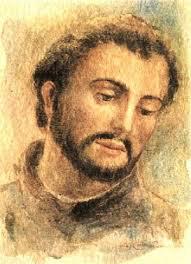
St. Francis Xavier
Francis Xavier, SJ, born Francisco de Jasso y Azpilicueta (7 April 1506 – 3 December 1552), was a Basque Roman Catholic missionary born in Xavier, Kingdom of Navarre (now part of Spain), and a co-founder of the Society of Jesus.
He was a companion of St. Ignatius of Loyola and one of the first seven Jesuits who took vows of poverty and chastity at Montmartre, Paris in 1534. He led an extensive mission into Asia, mainly in the Portuguese Empire of the time and was influential in evangelization work most notably in India. He also ventured into Japan, Borneo, the Maluku Islands, and other areas which had, until then, not been visited by Christian missionaries. In these areas, struggling to learn the local languages and in the face of opposition, he had less success than he had enjoyed in India.
It was a goal of Xavier to extend his missionary preaching to China but he died in Shangchuan Island shortly before doing so. St. Francis Xavier was beatified by Pope Paul V on 25 October 1619, and was canonized by Pope Gregory XV on 12 March 1622. In 1624 he was made co-patron of Navarre alongside Santiago. Known as the “Apostle of the Indies,” and the “Apostle of Japan”, he is considered to be one of the greatest missionaries since St. Paul. [2] In 1927, Pope Pius XI published the decree “Apostolicorum in Missionibus” naming St. Francis Xavier, along with St.
Thérèse of Lisieux, co-patron of all foreign missions. [3] He is now co-patron saint of Navarre with San Fermin. The Day of Navarre (Día de Navarra) in Spain marks the anniversary of Saint Francis Xavier’s death on 3 December 1552.
Make a gift to support vital local ministry
Your gift provides care and support for those in need in your local community
Subscribe to The Good News
Receive inspiration in your inbox from the Archdiocese of Brisbane